






Deploy Egnyte WebEdit App using Intune App Model
Let’s discuss the Deploy Egnyte WebEdit App using Intune App Model. Intune Enterprise App Catalog App provide Egnyte WebEdit app for users. The latest version of this application is available on the Enterprise App Catalog app.
Installing Egnyte WebEdit in an organization has many advantages. Users can edit files directly from the web interface without downloading, editing, and re-uploading them, eliminating the need to install full desktop applications.
Egnyte WebEdit is a lightweight application that allows users to select a file from Egnyte’s Web UI and open it in its native application (like Microsoft Word or Excel) for editing. It is the best option for users who want to access and edit files quickly.
In this blog post, I will share my experience installing the Egnyte WebEdit application with the Enterprise App Catalog App in Microsoft Intune. I have included all the steps to successfully install this application on your tenant.

Table of Contents
What are the Advanatges of Install Egnyte WebEdit?
Deploy Egnyte WebEdit App using Intune App Model
IT administrators can easily manage and deploy the application across the organization using the Intune Enterprise App Catalog App. This is particularly useful for users who need to edit files on their desktops without installing the full Egnyte Desktop App or Desktop Sync.
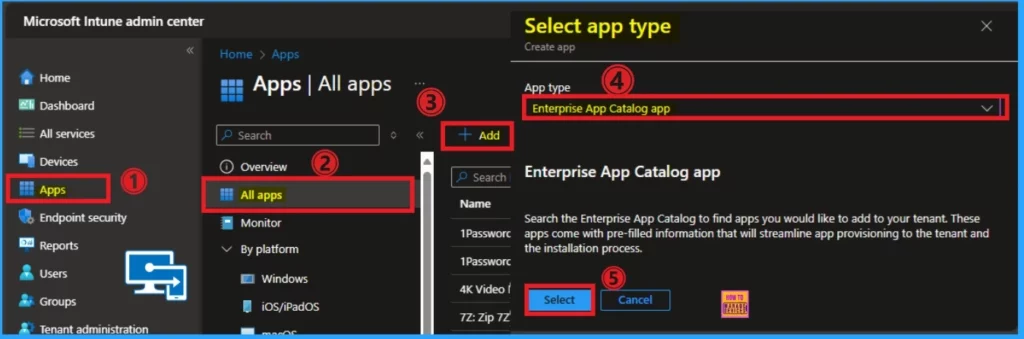
- Open the Intune admin center
- Apps > All apps > +Add > Enterprise App Catalog App
- Click on the Select button
- Deploy Cloudflare WARP using Intune Enterprise App Catalog App
- Easy way to Install Garden Gnome Package Viewer App using Intune Enterprise App Catalog App
- Enrollment of Android Corporate Devices using Staging Method Intune
App Information Tab
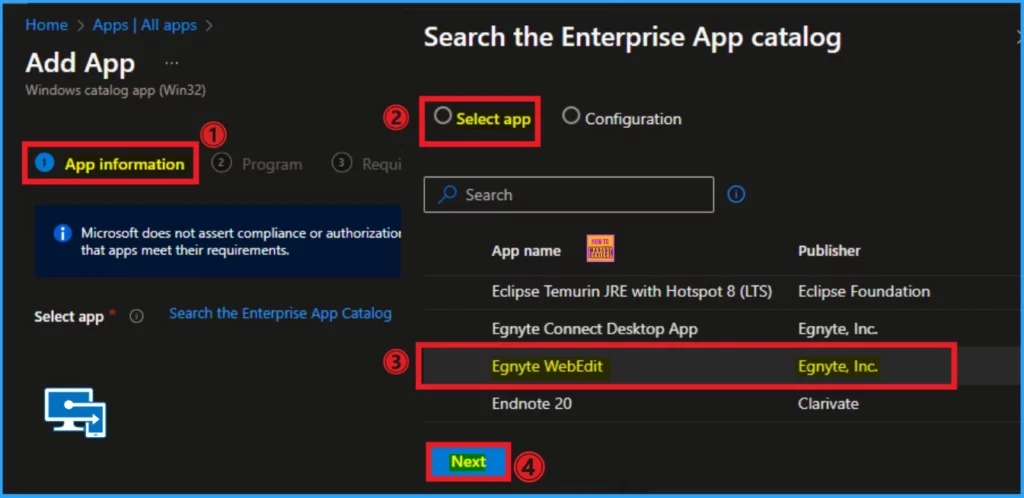
The App Information Tab is the first tab in the Enterprise App Catalog App. From this tab, you can select an app. Click on Search the Enterprise App Catalog. Select the Egnyte WebEdit app from the Select App tab. Click on the Next button.
Configuration Tab
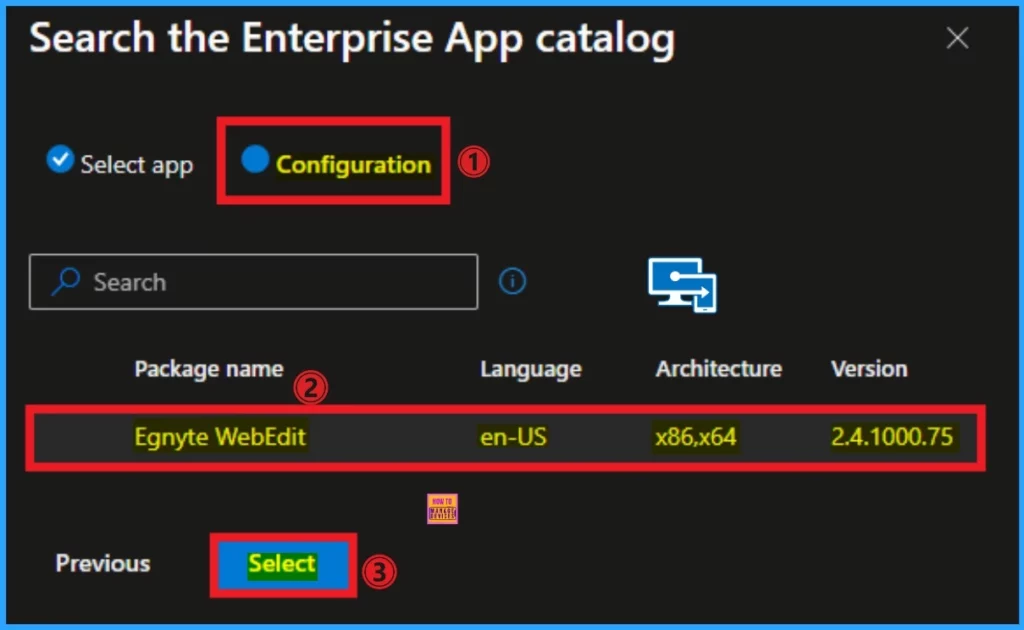
The Configuration tab shows the Egnyte WebEdit app’s package name, Language, Architecture, and version details. Click the Select button to continue.
| Package Name | Language | Architecture | Version |
|---|---|---|---|
| Egnyte | WebEdit | en-US | 2.4.1000.75 |
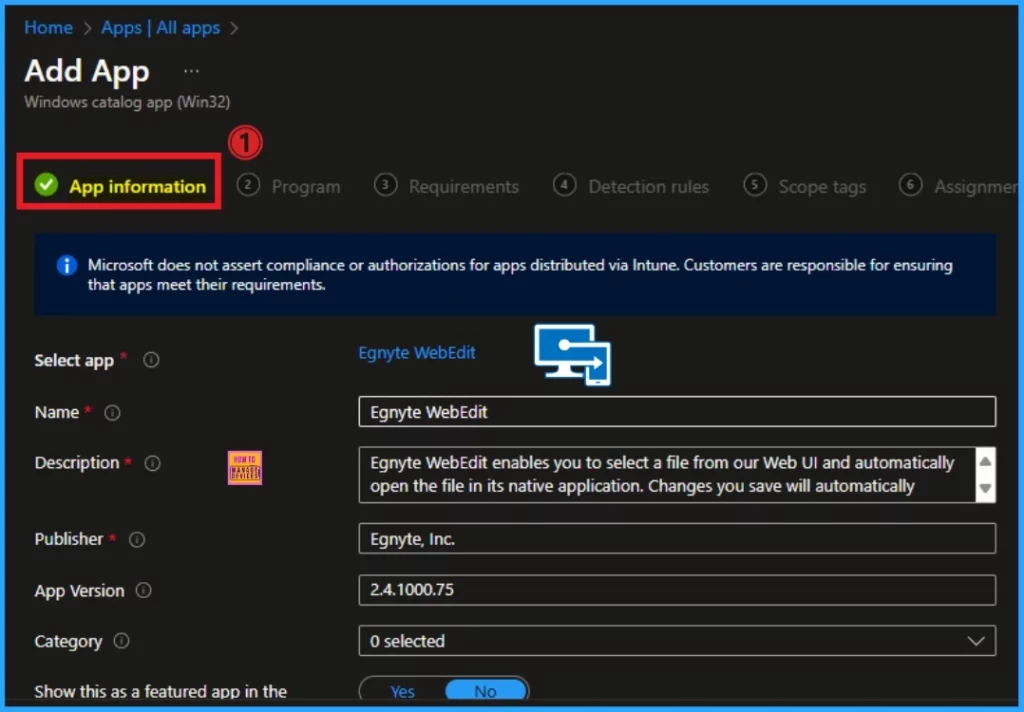
After selecting the app, you can see basic information, such as the app name, description, Publisher, App Version, category, etc. The Select App, Name, Description, and Publisher fields are mandatory. All the fields are automatically generated.
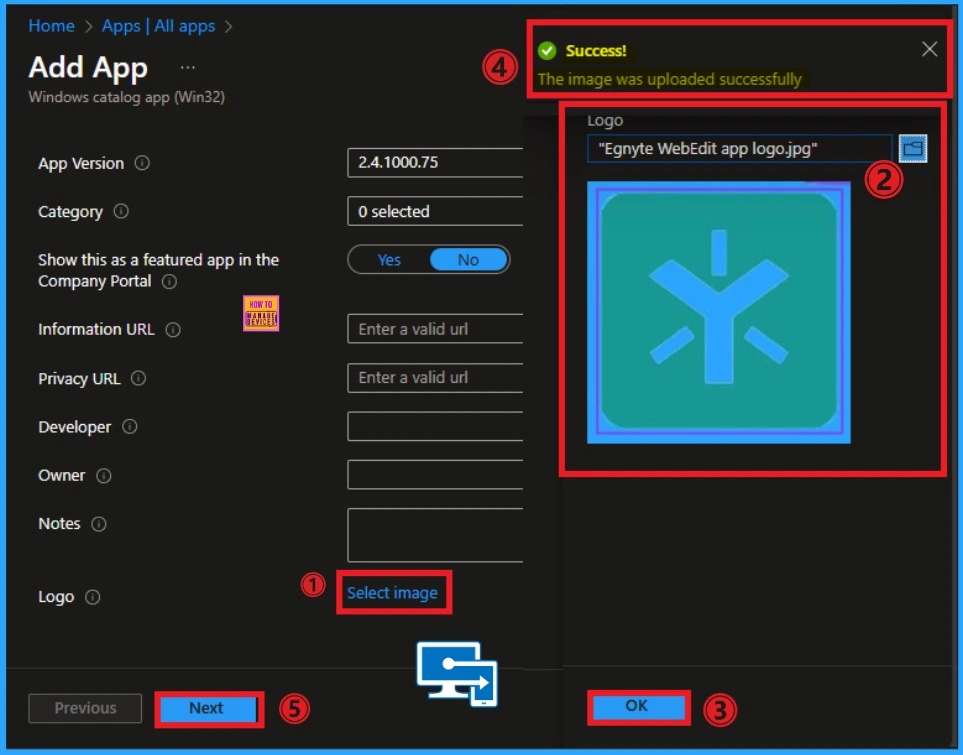
Then, slightly scroll down the App Information tab you can see Select image hyperlink to add logo. Click on the select the logo which you upload on your explorer before. After the logo upload on the Intune Enterprise App, you will get the uploaded success message. Then click on the OK button and another success notification will get you. Click on the Next button.
Program Tab
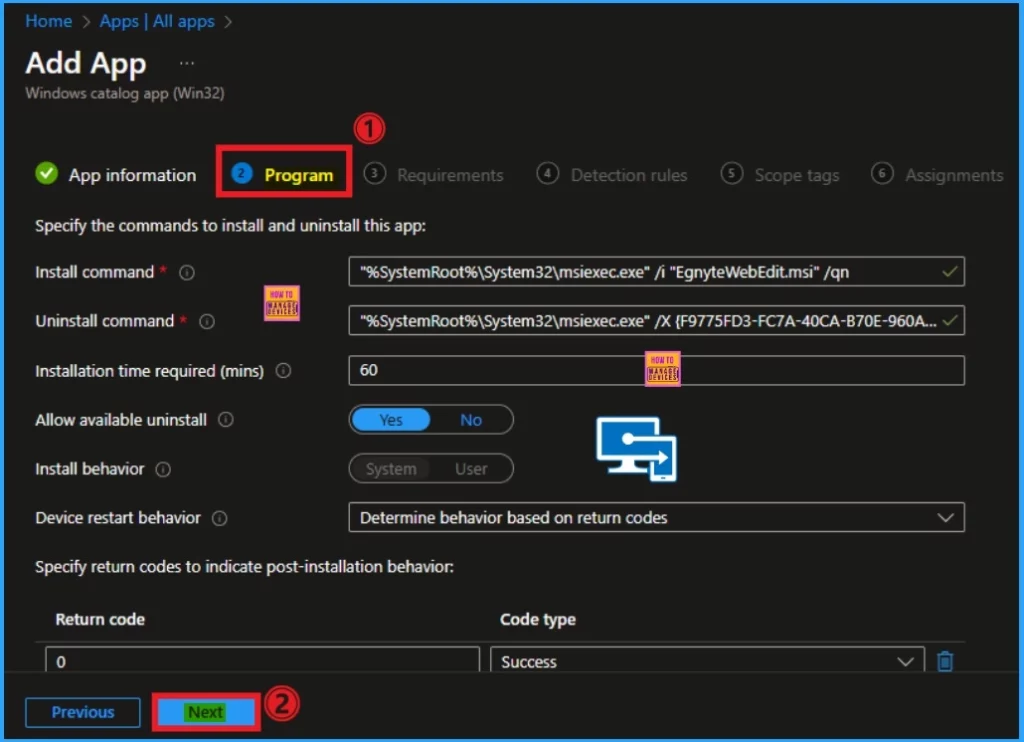
The Program tab shows specify the commands to install and uninstall this app. This commands are mandatory fields . Also you can see Installation time required (mins) and you can specify return codes to indicate post-installation behavior.
Requirements
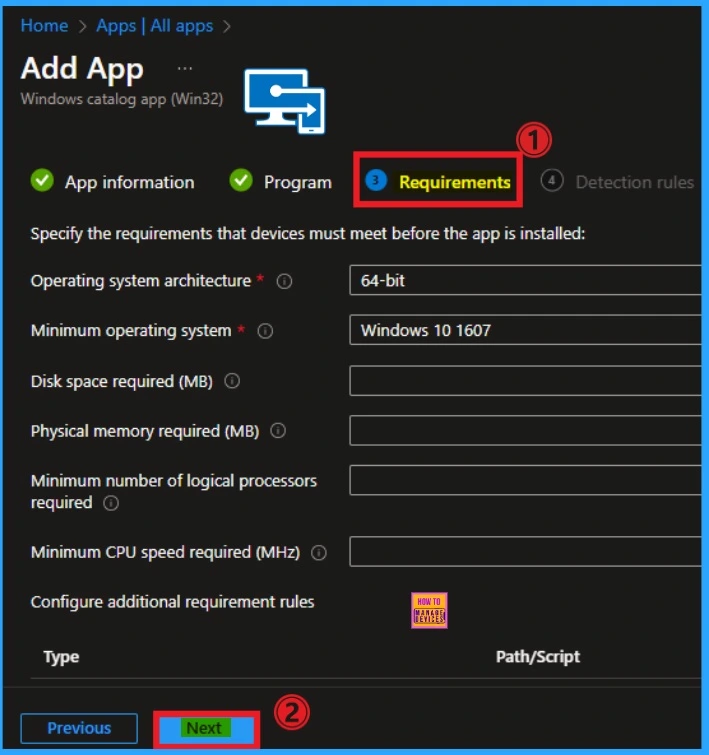
Requirements tab shows various requirements which you should now before completing the installation. It shows the OS architecture, Minimum OS Disk space required etc. Click on the Next button.
| Requirements | Details |
|---|---|
| Operating System architecture | 64-bit |
| Minimum Operating System | Windows 10 1607 |
Detection Rules
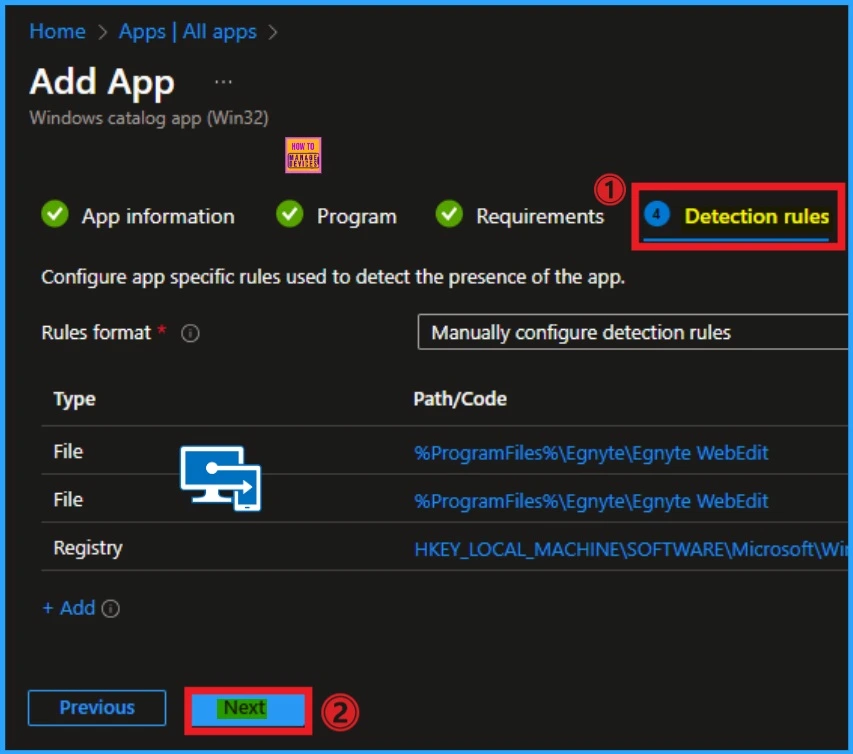
Detection rules helps you to configure app specific rules used to detect the presence of the app. Here the Rule format, file types are automatically generated. Click on the Next button.
Scope Tags
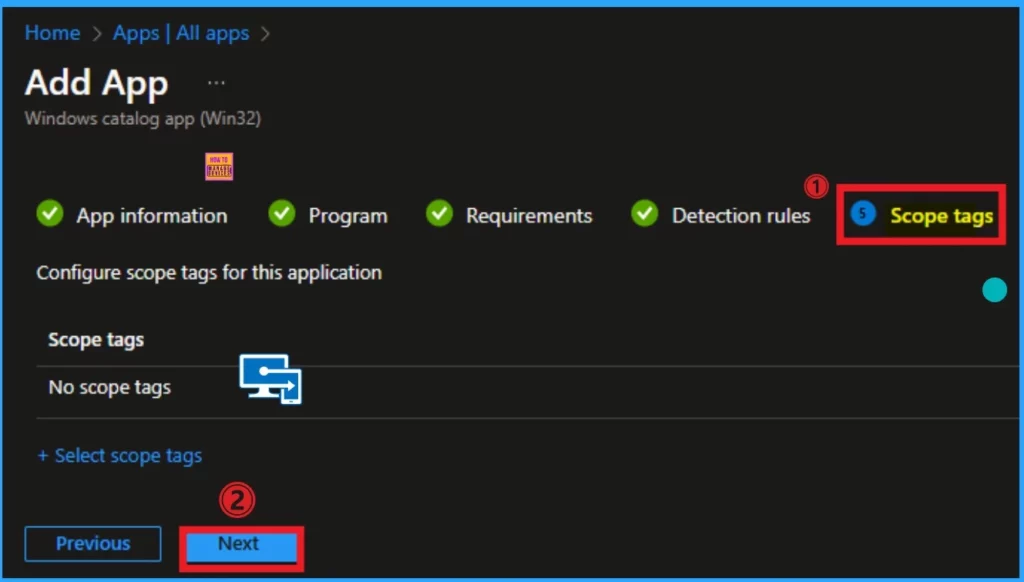
Scope tags are not a necessary section on Enterprise App Catalog App installation. It helps to control which admins can see and manage specific resources. Click on the Next button to continue.
Assignents Tab
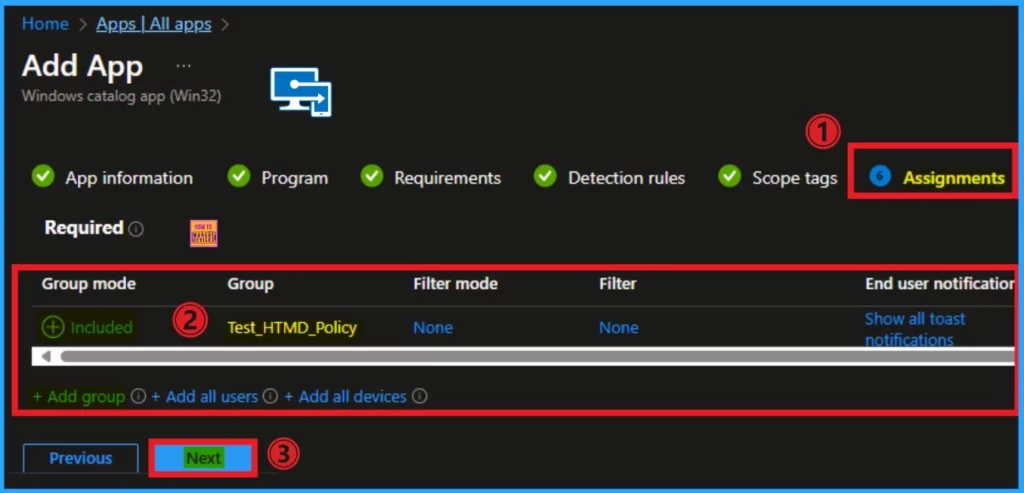
Assignments tab is used to assign the groups to the app installation. To add the group click on the +Add groups under included. Then select the groups on your tenant as your preferences. Then Click on the Select button then the group is appear on the Assignments tab. Click on the Next button.
Review + Create Tab
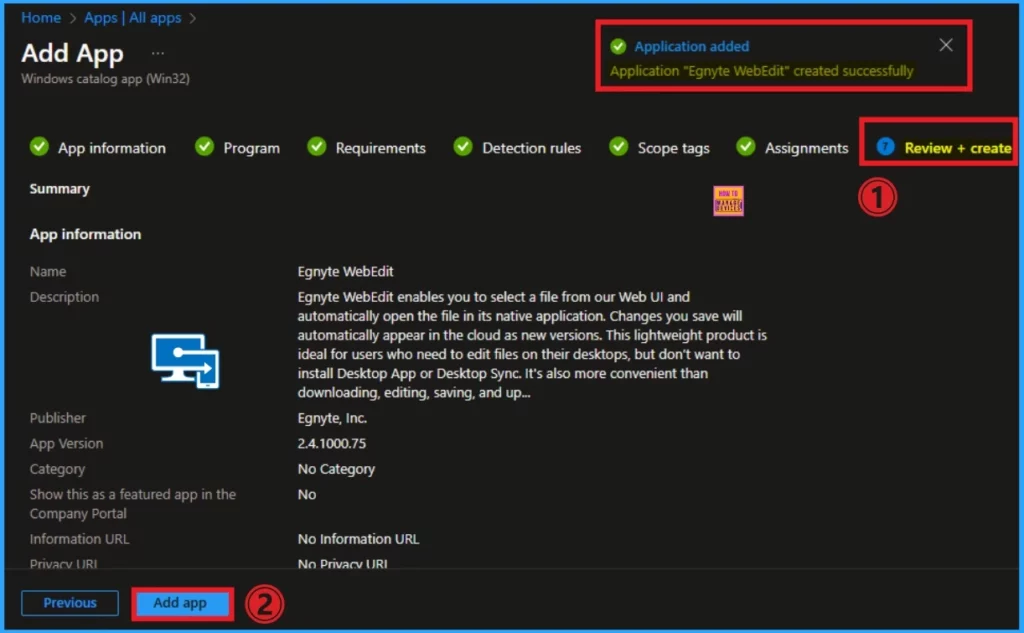
Review + Create tab shows all the previous sessions of app deployment. You can recheck each tab details on this tab and completed app installation. After rechecking click on the Add button. Then you will get the application added notification.
Device Install Status
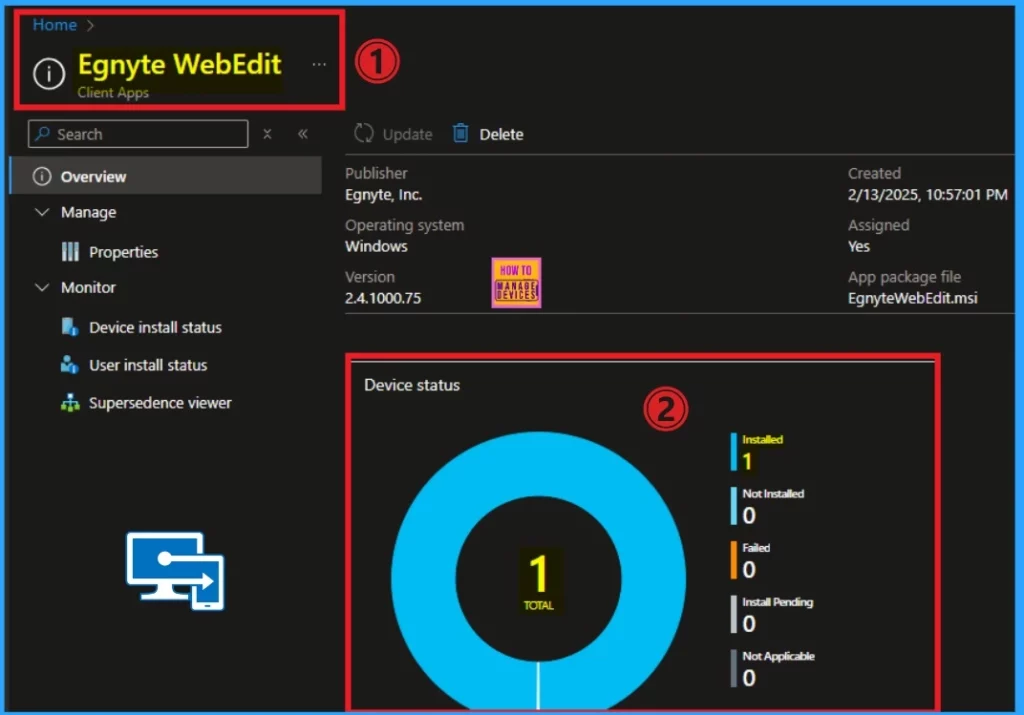
After completing the installation you can sync the device on company portal for faster deployment. Then you can check the installation status on the Intune Portal. To check this, Apps > All Apps > Egnyte WebEdit. Here you can see the app installed as 1.
End User Experience
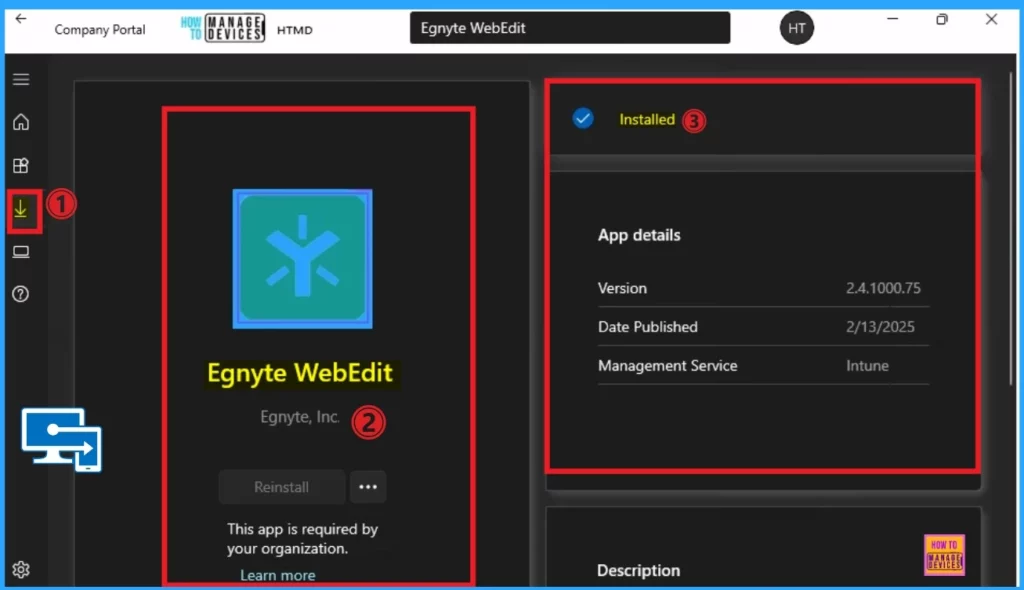
To check the End user Experience, You can go the Assigned Device Workstation. Go the Downloads and Updates search for your app. Here you can see the App is installed.
Need Further Assistance or Have Technical Questions?
Join the LinkedIn Page and Telegram group to get the latest step-by-step guides and news updates. Join our Meetup Page to participate in User group meetings. Also, Join the WhatsApp Community to get the latest news on Microsoft Technologies. We are there on Reddit as well.
Author
Anoop C Nair has been Microsoft MVP for 10 consecutive years from 2015 onwards. He is a Workplace Solution Architect with more than 22+ years of experience in Workplace technologies. He is a Blogger, Speaker, and Local User Group Community leader. His primary focus is on Device Management technologies like SCCM and Intune. He writes about technologies like Intune, SCCM, Windows, Cloud PC, Windows, Entra, Microsoft Security, Career, etc.


Discussion