




Quickly Disable Fast User Switching using Intune
In this post, you will learn how to disable fast user switching using Intune, aka Endpoint Manager. When a user logs onto a computer, the system loads their profile. Fast User Switching helps you to switch quickly between open accounts, allows multiple users to use the computer without interrupting what other users are working on without signing you out or closing your apps and files.
Switching to another account does not change the state of the applications that a user is currently running. The policy setting allows you to hide the Switch User interface in the Logon UI, the Start menu, and the Task Manager.
Let’s check the steps to create a policy for Fast User Switching. When you create the policy, it creates a device configuration profile. You can then assign or deploy this profile to devices in your organization. You can learn to create a policy with Intune Settings Catalog. Let’s see a list of Intune Settings Catalog Policies.
How to Disable Fast User Switching using Intune
Let’s follow the below steps to disable Fast User Switching –

- Sign in to the Microsoft Endpoint Manager admin center
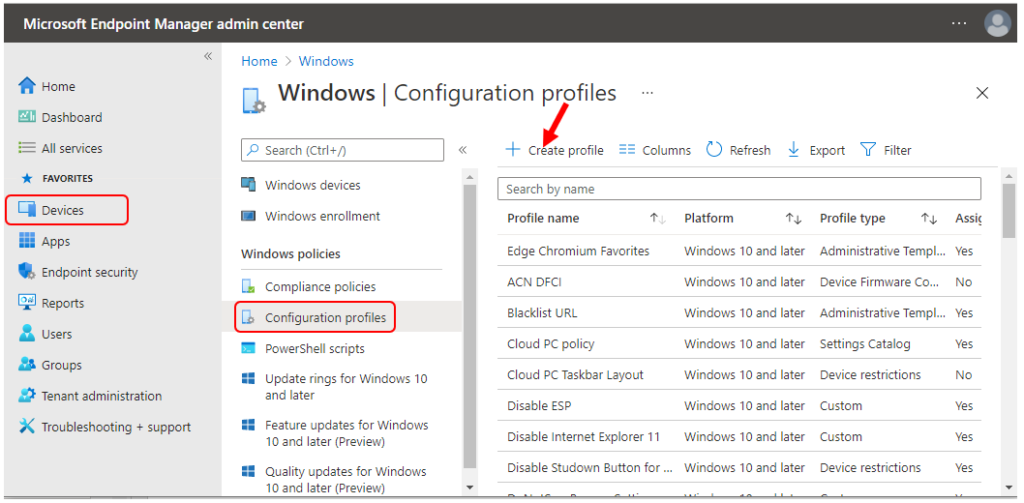
- Select Devices > Windows > Configuration profiles > Create profile.
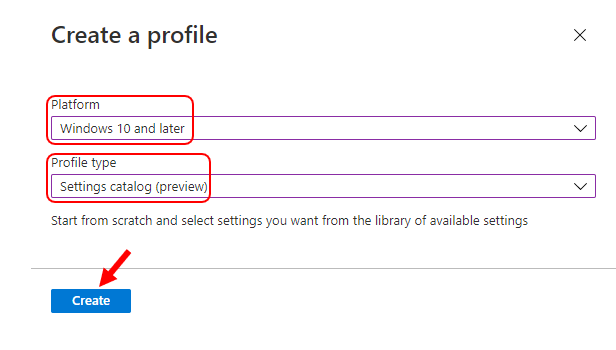
In Create Profile, Select Platform, Windows 10 and later and Profile, Select Settings catalog (preview). Click on Create button.
On the Basics tab, enter a descriptive name, such as Hide Fast User Switching. Optionally, enter a Description for the policy, then select Next.
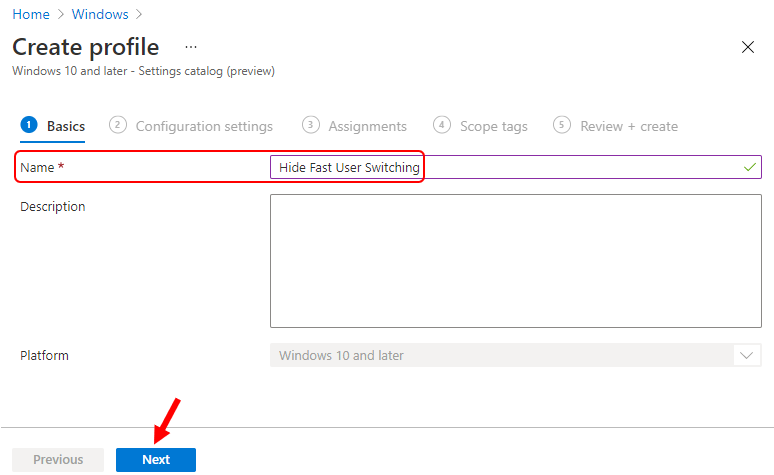
In Configuration settings, select Add settings.
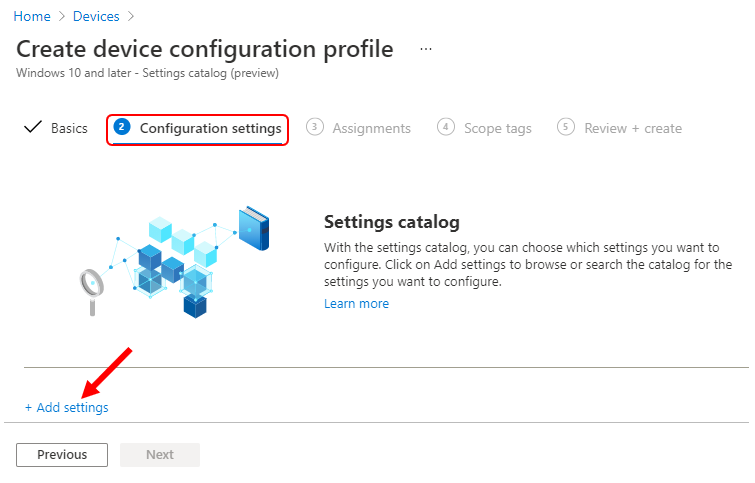
Select any settings you want to configure. Or, choose Select all these settings. For example, selected Windows Logon to see all the settings in this category. After adding your settings, click the cross mark at the right-hand corner to close the settings picker.
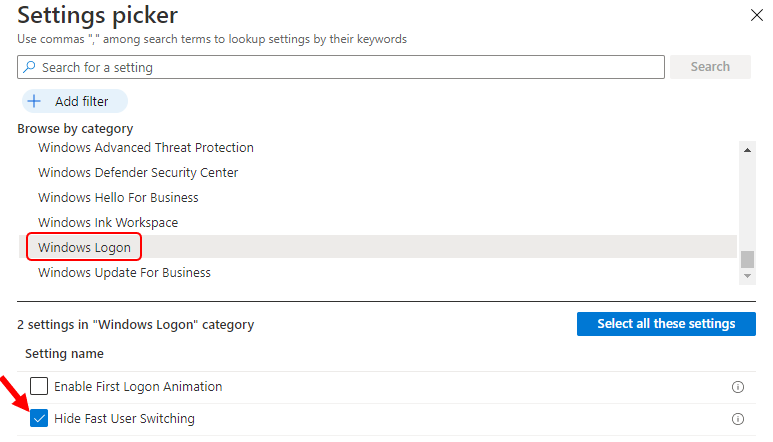
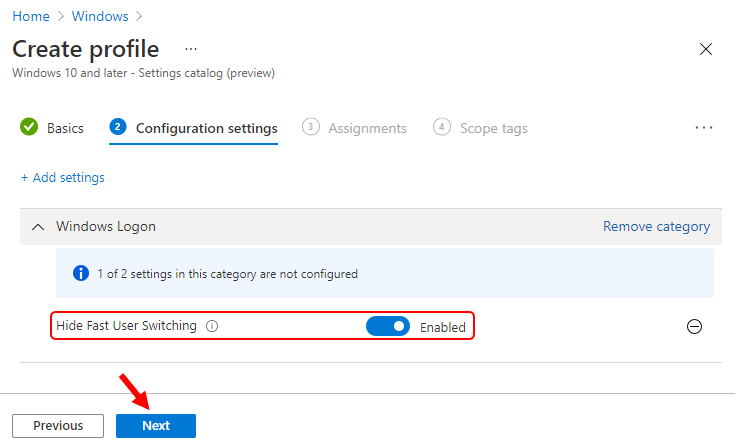
All the settings are displayed with a default value. Toggle the switch to enable the settings. If you don’t want to configure a setting, then select the minus.
Under Assignments, In Included groups, select Add groups and then choose Select groups to include one or more groups. Select Next to continue.
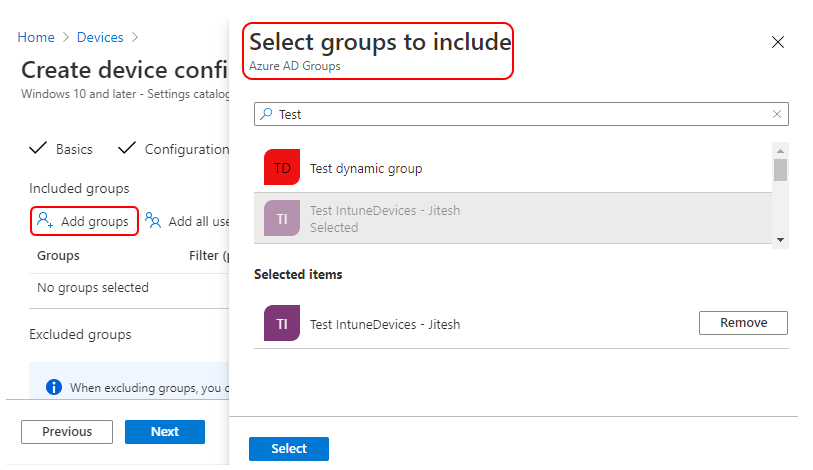
In Scope tags, you can assign a tag to filter the profile to specific IT groups. Add scope tags (if required) and click Next.
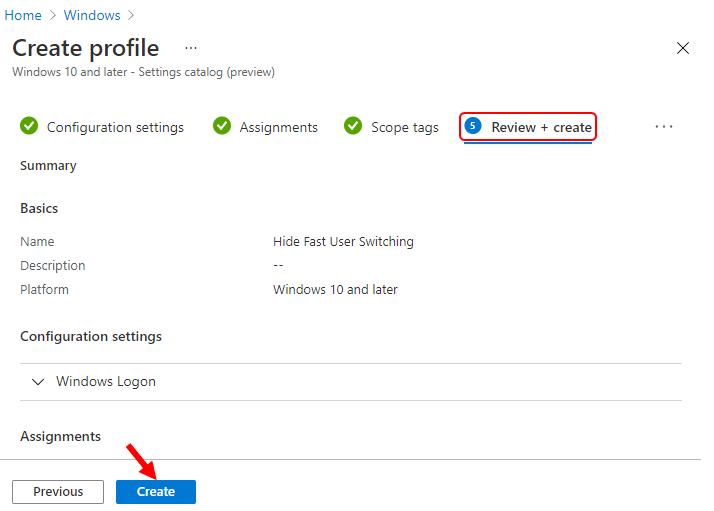
In Review + create, review your settings. When you select Create, your changes are saved, and the profile is assigned.
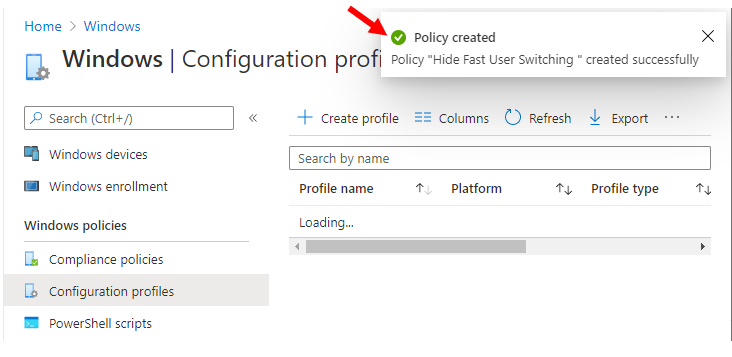
A notification will appear automatically in the top right-hand corner with a message. Here you can see, Policy “Hide Fast User Switching” created successfully. The policy is also shown in the profiles list.
Your groups will receive your profile settings when the devices check-in with the Intune service.
End-Users Experience
Let’s check the end users experience in Windows 10 devices.
The Switch User interface is hidden from the user attempting to log on or logged on to the computer with this policy applied. The locations where the Switch User interface appears are in the Logon UI, the Start menu, and the Task Manager.
Author
About Author -> Jitesh has over 5 years of working experience in the IT Industry. He writes and shares his experiences related to Microsoft device management technologies and IT Infrastructure management. His primary focus area is Windows 10 Deployment solution with Configuration Manager, Microsoft Deployment Toolkit (MDT), and Microsoft Intune.


Hi Jitesh,
Thanks for the article, please let me know if this would disable the option (logon as another user) as well.
Regards,
Deepa
StaffHi Deepa, Thanks for your time in reading the post. Are you referring to the “Run as different user” option? This policy will hide Switch User from Logon UI, the Start menu, and the Task Manager.
Hi Jitesh,
Thanks for your reply, please let me know if this would restrict a user from logging as an ‘other user’, if the system is locked.
Thanks and Regards,
Deepa