Skip to content
FIX SCCM Server Trust Relationship Issue with Primary Domain | ConfigMgr

FIX SCCM Server Trust Relationship Issue with Primary Domain | ConfigMgr

Written By Anoop C Nair
Last Updated July 26, 2024
Posted In SCCM
SHARE

Let’s check how to fix the SCCM Server Trust Relationship Issue with the Primary Domain. I had an issue with the Hyper-V lab environment.

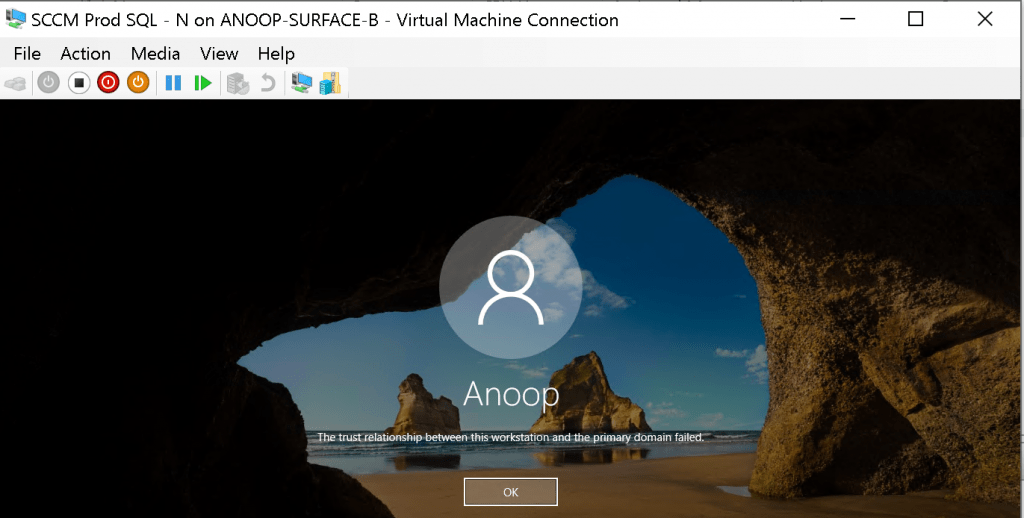
I could not log in to the SCCM LAB server with Domain User and Local Administrative User. The exact error was “The trust relationship between this workstation and the primary domain failed.”

Index
Problem Statement
Solution – FIX SCCM Server Trust Relationship Issue
Reset the Local User Password of the SCCM Server
Remove the ConfigMgr Virtual Machine from the Domain
Add the Network Adapter Back
Add Virtual Machine back to Domain
Results
FIX SCCM Server Trust Relationship Issue with Primary Domain | ConfigMgr – Table.1

Problem Statement

I could not log in to the SCCM|SQL server after reinstalling the Windows 10 hyper-v device. The VM is connected to the same virtual network as Domain Control.

The Error – The trust relationship between this workstation and the primary domain failed.

Patch My PC
FIX SCCM Server Trust Relationship Issue with Primary Domain | ConfigMgr - Fig.1
FIX SCCM Server Trust Relationship Issue with Primary Domain | ConfigMgr – Fig.1

Even I don’t remember the local user name and password to remove the Hyper-V virtual machine from the domain and add it back.
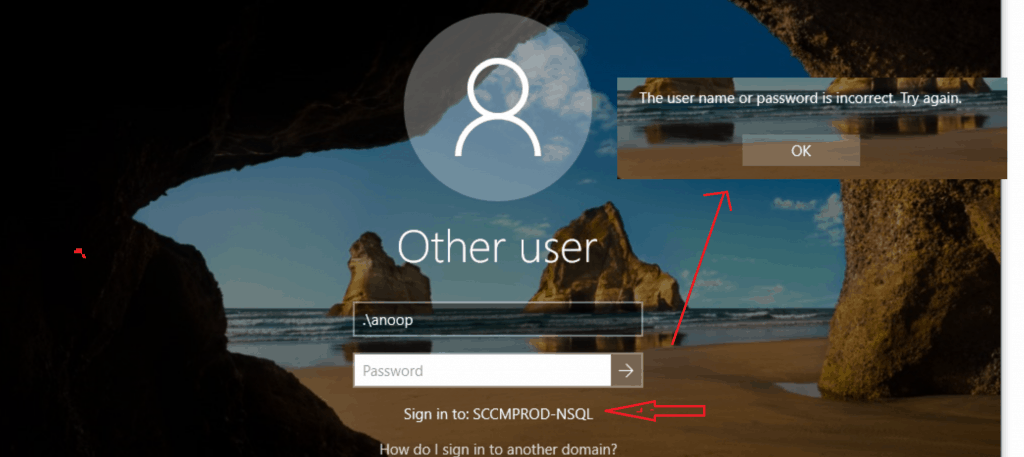
FIX SCCM Server Trust Relationship Issue with Primary Domain | ConfigMgr - Fig.2
FIX SCCM Server Trust Relationship Issue with Primary Domain | ConfigMgr – Fig.2

Solution – FIX SCCM Server Trust Relationship Issue

To better understand, I have split the solution or fix to the SCCM server Trust Relationship Issue into several sub-topics below.

Remove the Network Adapter

  • Shutdown the SCCM virtual machine from the Hyper-v console
  • Click on FileSettings from the Virtual Machine Window
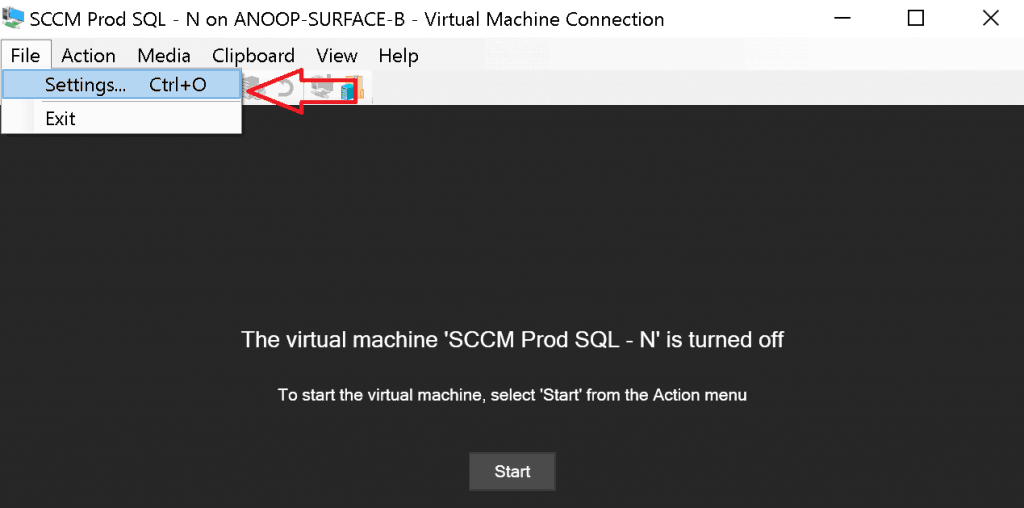
FIX SCCM Server Trust Relationship Issue with Primary Domain | ConfigMgr - Fig.3
FIX SCCM Server Trust Relationship Issue with Primary Domain | ConfigMgr – Fig.3
  • Click on the Network Adapter option on the left side pane of the Settings page
  • Click on the REMOVE button to detach the SCCM virtual machine from the network
  • Click on Apply and OK to close the settings window
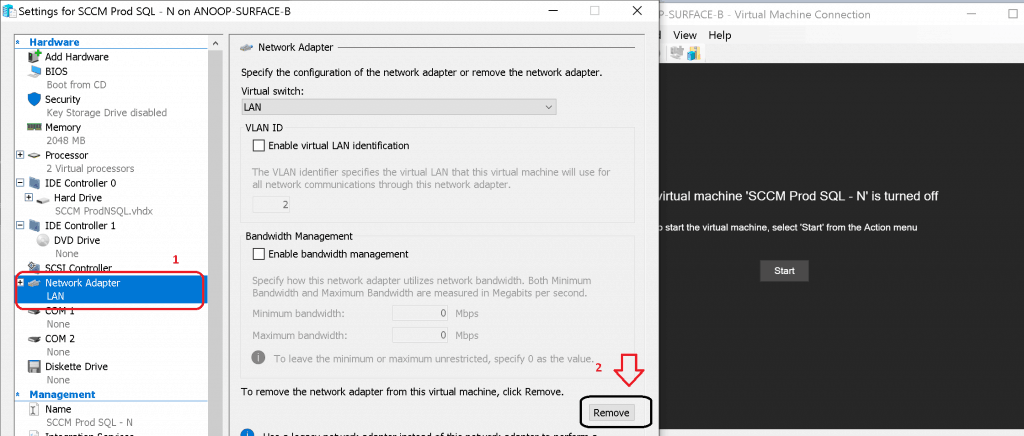
FIX SCCM Server Trust Relationship Issue with Primary Domain | ConfigMgr - Fig.4
FIX SCCM Server Trust Relationship Issue with Primary Domain | ConfigMgr – Fig.4
  • Click on the Start button to start the Virtual Machine
  • Try to log in with the domain username and password
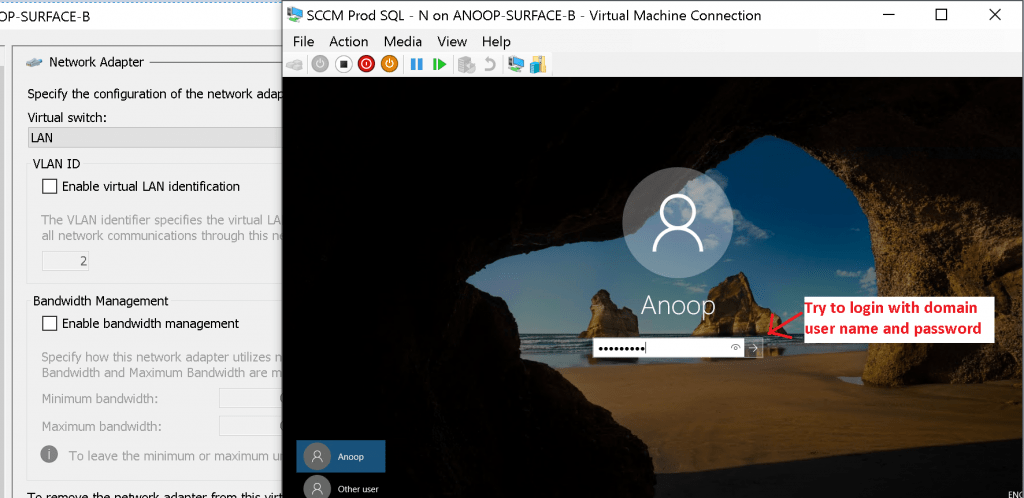
FIX SCCM Server Trust Relationship Issue with Primary Domain | ConfigMgr - Fig.5
FIX SCCM Server Trust Relationship Issue with Primary Domain | ConfigMgr – Fig.5
  • Successfully able to login to VM with cached domain credentials and temp user profile
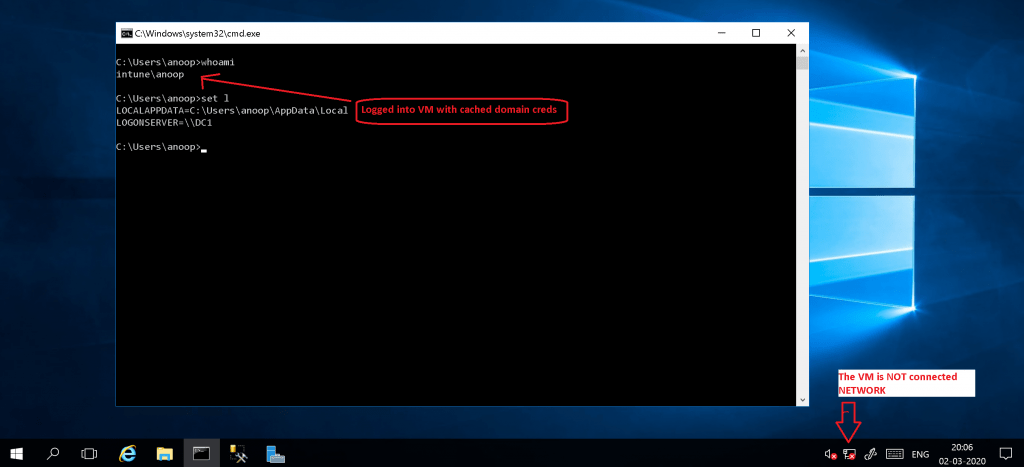
FIX SCCM Server Trust Relationship Issue with Primary Domain | ConfigMgr - Fig.6
FIX SCCM Server Trust Relationship Issue with Primary Domain | ConfigMgr – Fig.6

Reset the Local User Password of the SCCM Server

  • Now we have logged into the SCCM virtual machine, let’s reset the password of the local user account
  • Add the user to the local administrator’s group
  • Run the following command “compmgmt”
  • Select the User called Anoop from the Local Users and Groups node
  • Right-click on the user and select the RESET Password option
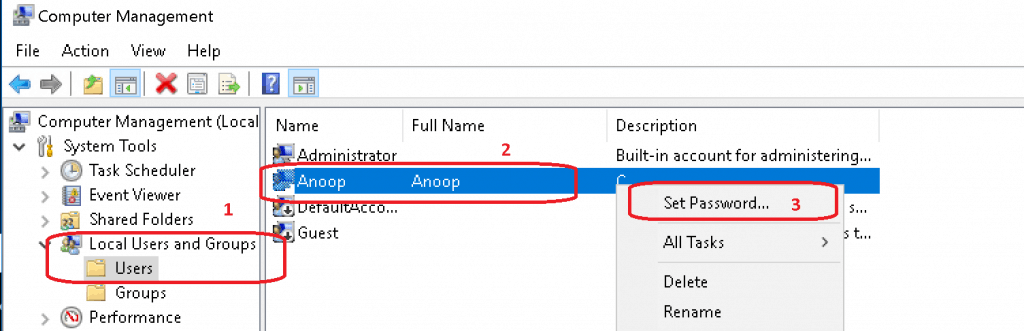
FIX SCCM Server Trust Relationship Issue with Primary Domain | ConfigMgr - Fig.7
FIX SCCM Server Trust Relationship Issue with Primary Domain | ConfigMgr – Fig.7

Remove the ConfigMgr Virtual Machine from the Domain

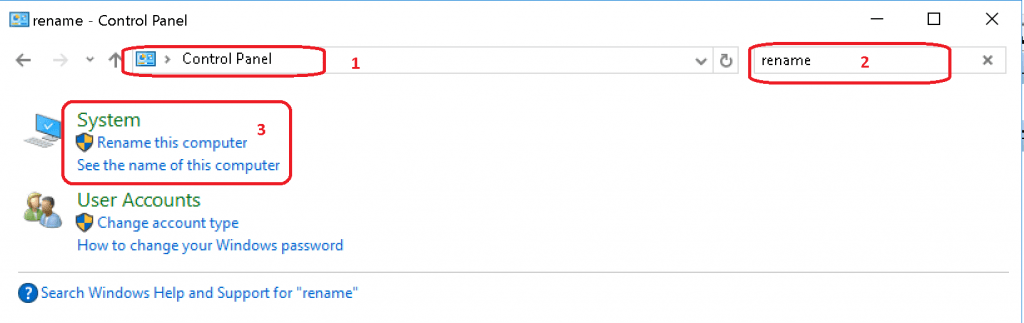
  • Open Control PanelSearch with the keyword “Rename
  • Click on Rename this Computer link
FIX SCCM Server Trust Relationship Issue with Primary Domain | ConfigMgr - Fig.8
FIX SCCM Server Trust Relationship Issue with Primary Domain | ConfigMgr – Fig.8
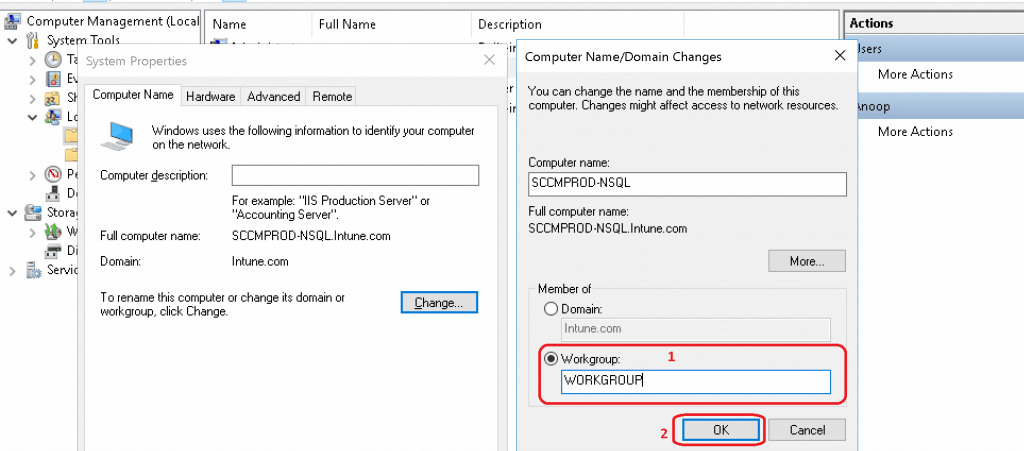
  • From the System Properties window- click on the CHANGE button
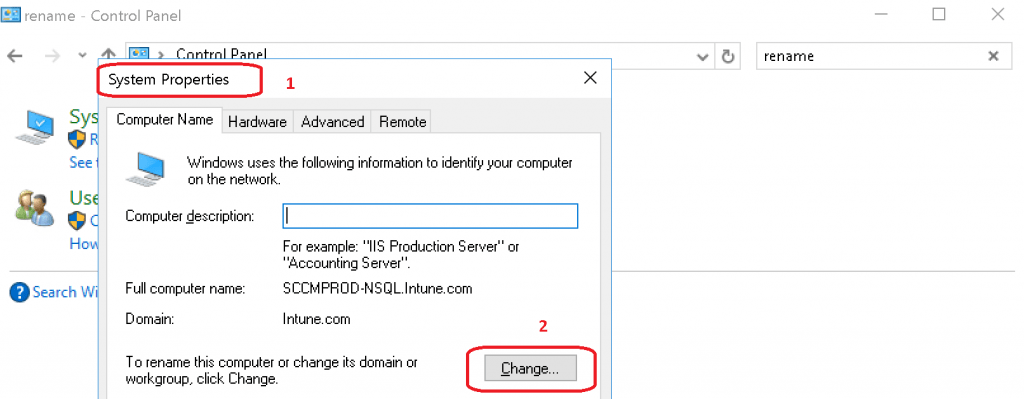
FIX SCCM Server Trust Relationship Issue with Primary Domain | ConfigMgr - Fig.9
FIX SCCM Server Trust Relationship Issue with Primary Domain | ConfigMgr – Fig.9
  • Select the Workgroup option under a member of the section from the Computer Name/Domain Change window
  • Click on the OK button to continue
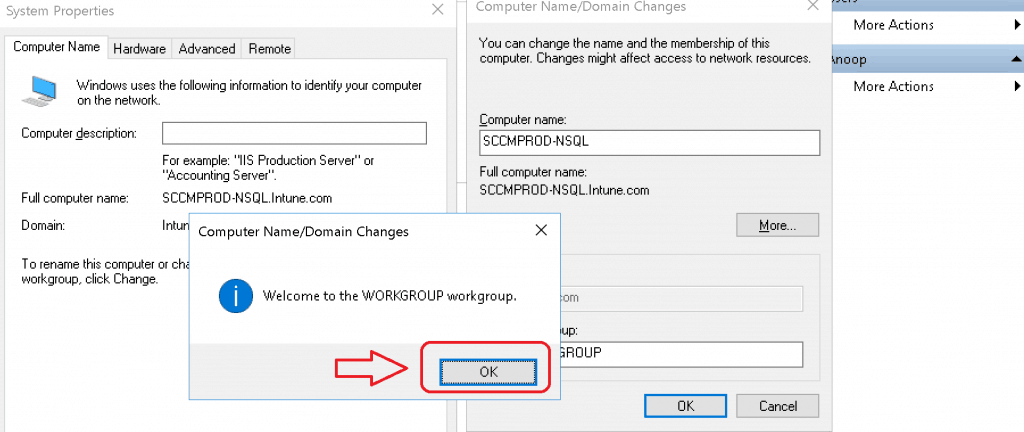
FIX SCCM Server Trust Relationship Issue with Primary Domain | ConfigMgr - Fig.10
FIX SCCM Server Trust Relationship Issue with Primary Domain | ConfigMgr – Fig.10
  • Click OK on the popup message “After you leave the domain, you must know the local administrator account password to log in to your computer. Click OK to continue.”
  • Confirm the Domain User name and password in the popup window
  • Click OK on the “Welcome to the WORKGROUP workgroup” popup window
  • Click OK on “You must restart your computer to apply these changes. Before restarting, save any open files and close all programs.” window
  • Shutdown the SCCM Virtual Machine
FIX SCCM Server Trust Relationship Issue with Primary Domain | ConfigMgr - Fig.11
FIX SCCM Server Trust Relationship Issue with Primary Domain | ConfigMgr – Fig.11

Add the Network Adapter Back

I removed the network adapter in the above section. Now, it’s time to add another one to reconnect connectivity to a primary domain controller in the LAB.

  • Click on FileSettings from the Virtual Machine Window
  • Click on ADD Hardware option on the left side pane of the Settings page
  • Select Network Adapter and click on ADD button to attach the SCCM virtual machine back to the LAN network
  • Select the virtual Switch you want to connect “LAN” in my scenario
  • Click on Apply and OK to close the settings window
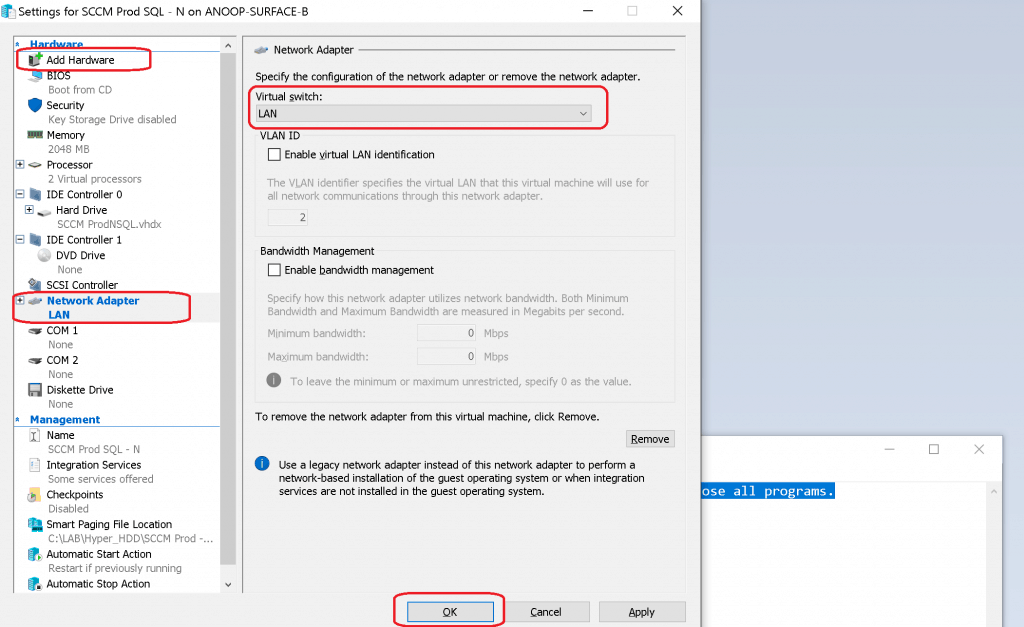
FIX SCCM Server Trust Relationship Issue with Primary Domain | ConfigMgr - Fig.12
FIX SCCM Server Trust Relationship Issue with Primary Domain | ConfigMgr – Fig.12

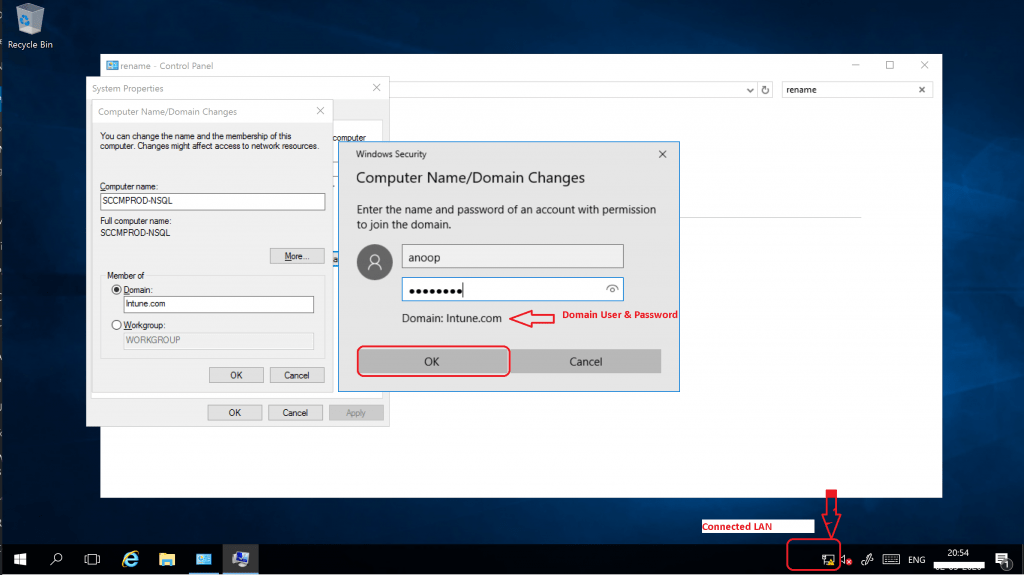
Add Virtual Machine back to Domain

  • Start the Virtual Machine
  • Login to Virtual Machine with a local user account and password (did reset the password in the above step)
  • Open Control PanelSearch with the keyword “Rename
  • Click on Rename this Computer link
  • From the System Properties window- click on the CHANGE button
  • Select the Domain option under a member of the section from the Computer Name/Domain Change window
  • Enter your domain FQDN “Intune.com”
  • Enter the domain user name and password
  • Click on the OK button to continue
FIX SCCM Server Trust Relationship Issue with Primary Domain | ConfigMgr - Fig.13
FIX SCCM Server Trust Relationship Issue with Primary Domain | ConfigMgr – Fig.13
  • Click OK on the popup window message “Welcome to the Intune.com domain.
  • Restart the Virtual Machine to complete the domain join process
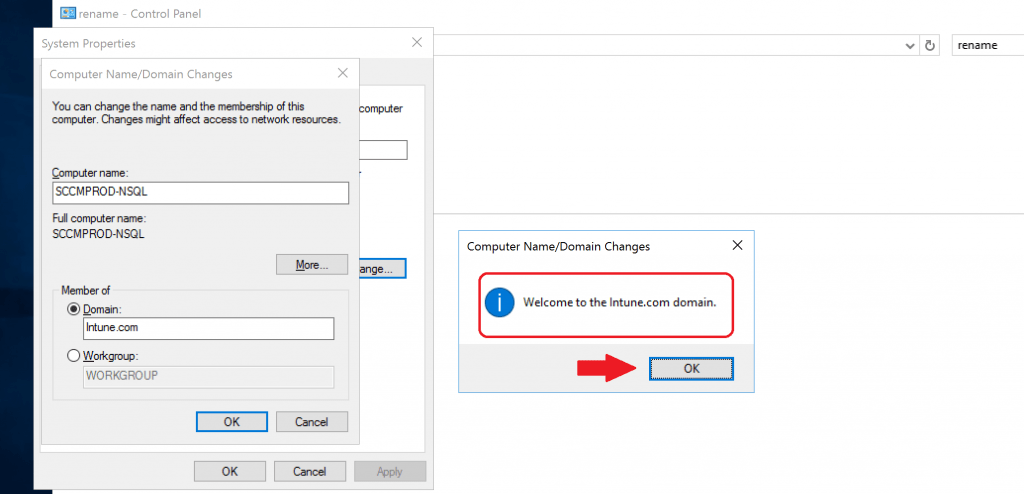
FIX SCCM Server Trust Relationship Issue with Primary Domain | ConfigMgr - Fig.14
FIX SCCM Server Trust Relationship Issue with Primary Domain | ConfigMgr – Fig.14

Results

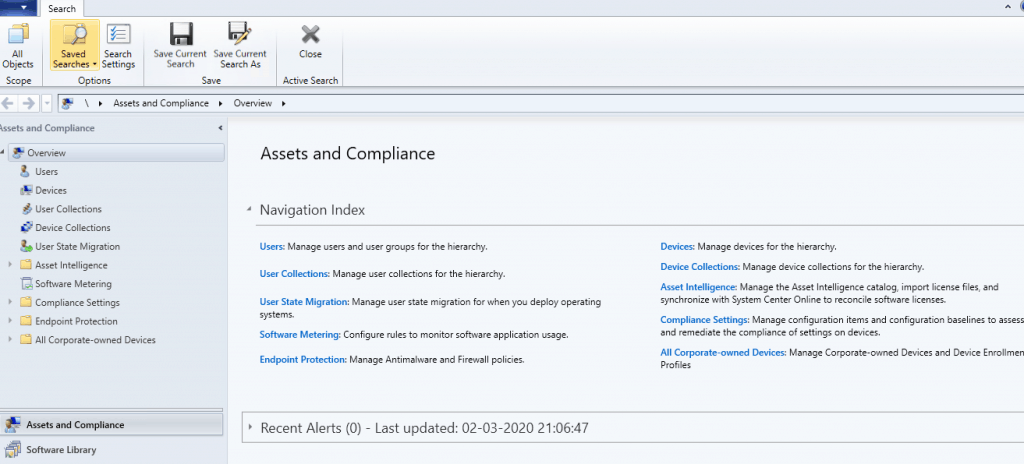
  • Log in to a virtual machine with a domain username and password
  • Launch the SCCM console successfully
FIX SCCM Server Trust Relationship Issue with Primary Domain | ConfigMgr - Fig.15
FIX SCCM Server Trust Relationship Issue with Primary Domain | ConfigMgr – Fig.15

Resources

We are on WhatsApp. To get the latest step-by-step guides and news updates, Join our Channel. Click here –HTMD WhatsApp.

Author

Anoop C Nair is Microsoft MVP! He is a Device Management Admin with more than 20 years of experience (calculation done in 2021) in IT. He is a Blogger, Speaker, and Local User Group HTMD Community leader. His main focus is on Device Management technologies like SCCM 2012, Current Branch, and Intune. He writes about ConfigMgr, Windows 11, Windows 10, Azure AD, Microsoft Intune, Windows 365, AVD, etc.
Written by

Anoop C Nair is Workplace Technology solution architect with 25+ years of experience in global enterprise organizations such as JP Morgan, Capgemini, etc. Microsoft Certified Trainer. Microsoft MVP from 2015 onwards for consecutive 11+ years! He also conducts Intune and modern workplace tech training for enterprise organizations. He is Blogger, Speaker, and Founder of HTMD Community and HTMD Conference. His main focus is on Device Management technologies like Intune, Windows, Cloud PC. He writes about technologies like Intune, SCCM, Windows, Cloud PC, Windows, Entra, Microsoft Security.

Discussion · 1 comment

Join the discussion

Your email address will not be published. Required fields are marked *

Related guides

Intune

Windows 11 KB5101650 KB5099414 July 2026 Patch and 3 Zero Day Vulnerabilities and 570 Flaws

Key Takeaways Windows 11 KB5101650 KB5099414 July 2026 Patch and 3 Zero Day Vulnerabilities and 570 Flaws! In the July 2026 Patch, Microsoft introduced new features designed to improve the overall Windows experience. The update adds enhancements to Windows Update for more flexible update management and introduces Point-in-Time Restore, providing an additional recovery option for […]

AC Anoop C Nair 9 min read
Intune

2026 June KB5094126 KB5093998 Windows 11 Patch | 3 Zero Day Vulnerabilities and 200 Flaws

Key Takeaways 2026 June KB5094126 KB5093998 Windows 11 Patch | 3 Zero Day Vulnerabilities and 200 Flaws! The June 2026 Windows 11 Patch Tuesday update brings several improvements to File Explorer. It adds support for additional archive formats, including UU, CPIO, XAR, and NuGet Packages (NUPKG). The update also preserves View and Sort preferences in […]

AC Anoop C Nair 10 min read
Intune

2026 May KB5089549 KB5087420 Windows 11 Patch | 0 Zero Day Vulnerabilities and 120 Flaws

Key Takeaways The Windows 11 May 2026 Patch KB5089549 KB5087420 Update brings important security fixes, performance improvements, and reliability enhancements across the operating system. The update introduces new features such as Xbox Mode for gaming, File Explorer improvements, enhanced input and sharing experiences, better taskbar and Windows Hello reliability, and additional enterprise management capabilities for […]

AC Anoop C Nair 8 min read
SCCM

ConfigMgr 2603 Introduces New Early Update Enrollment Process

Key Takeaways In this post we are discussing the ConfigMgr 2603 Introduces New Early Update Enrollment Process. Microsoft has officially released Configuration Manager version 2603 to the Early Update Ring, giving organizations an opportunity to test upcoming improvements before the global production rollout. The release is targeted at enterprises running ConfigMgr version 2409 or later […]

AC Anoop C Nair 3 min read