




Enable Forward Back Buttons to Navigate Browsing History for Kiosk Users using Intune
Let’s discuss Enable Forward Back Buttons to Navigate Browsing History for Kiosk Users using Intune. Enable Navigation Buttons policy is a part of the Kiosk Browser configuration within a Windows Kiosk device profile in Microsoft Intune.
By enabling this policy, Minimizes the risk of a user navigating to unapproved sites, preventing potential exploits, or simply escaping the intended workflow. Restricted User Experience: Can be frustrating for users if they genuinely need to go back one step in a multi-step process.
The primary goal of disabling this policy is to strictly lock the user to a single or a few approved web pages within the kiosk application. Disabling navigation buttons is a key security and control measure to prevent users from accidentally or intentionally browsing away from the intended path.
This policy really helpful for users, admins and organization. By enabling the buttons, the policy supports users who need to perform multi-step interactions, like filling out a complex form or browsing an internal knowledge base, where going back to a previous screen is a necessary part of the application’s function.

Table of Contents
Enable Forward Back Buttons to Navigate Browsing History for Kiosk Users using Intune
The person using the device only needs to look at the screen or click one simple button (like a “start” button or a link). They don’t need to browse the web. Adding extra buttons, like Forward and Back, is useless because the user has a single purpose. Every extra button or menu is a potential weakness. A user, either by accident or on purpose, might click the navigation buttons repeatedly or try unusual sequences.
- Deploy Kiosk End Session Button Policy For Full Browser Reset With Intune
- Block URL Exceptions for Kiosk Browser to Enforce Least Privilege for Web Access using Intune
- How Idle Time Controls Kiosk Browser Session Restart using Intune Policy
- Control Least Privilege App Container Sandbox for Printing Services in Edge Browser using Intune
Configure Policy from Intune Portal
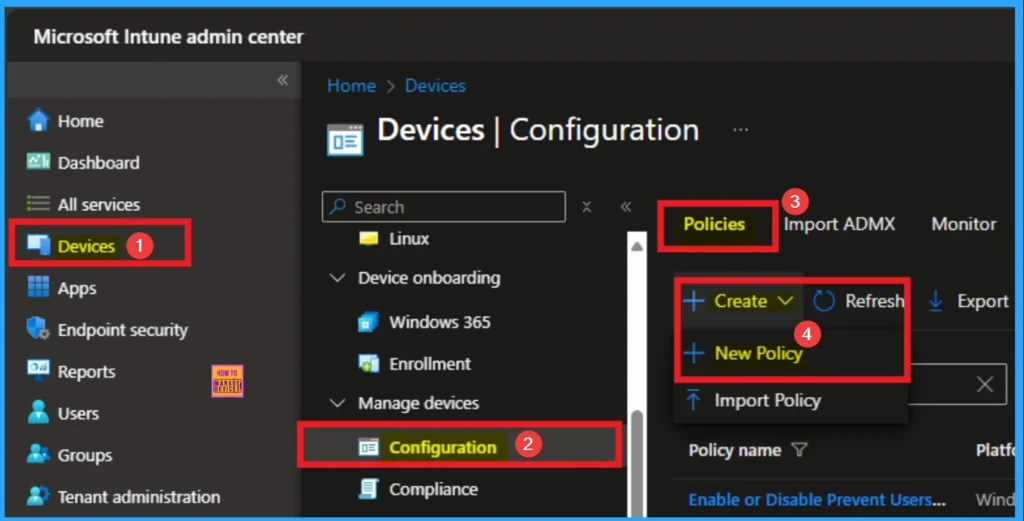
By sign in to Microsoft Intune Admin center you can easily configure Windows Apps Access policy. Sign in with Microsoft Intune Admin center. Go to Devices > Configuration > +Create >+ New Policy.
Profile Creation of Policy
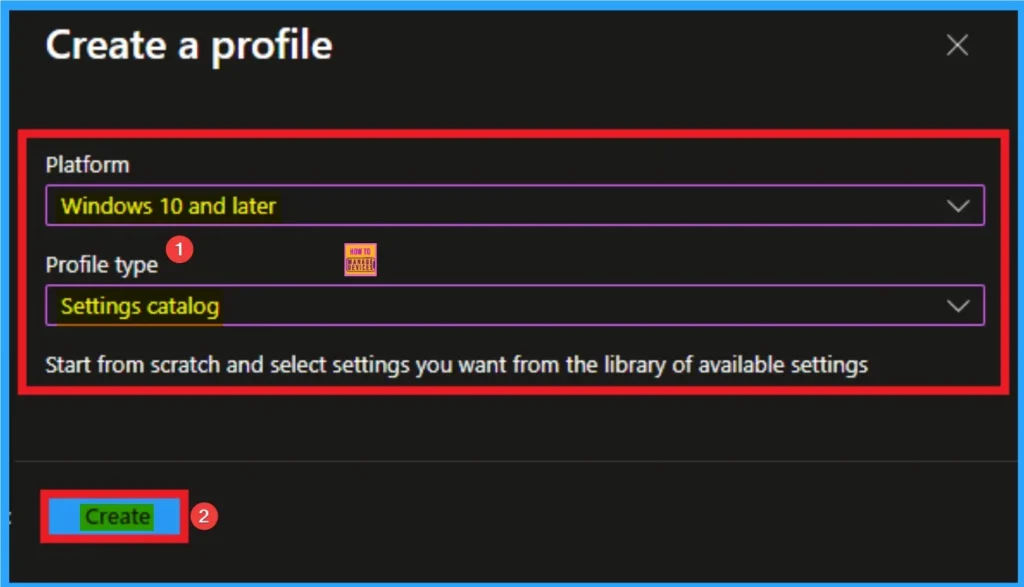
After that, you can Create a Profile for the policy which you want to configure. To create a profile you have to select platform and profile type. Here I selected Windows 10 and later as the Platform and Settings catalog as the profile type. Then click on the Create button.
Filling Basic Details
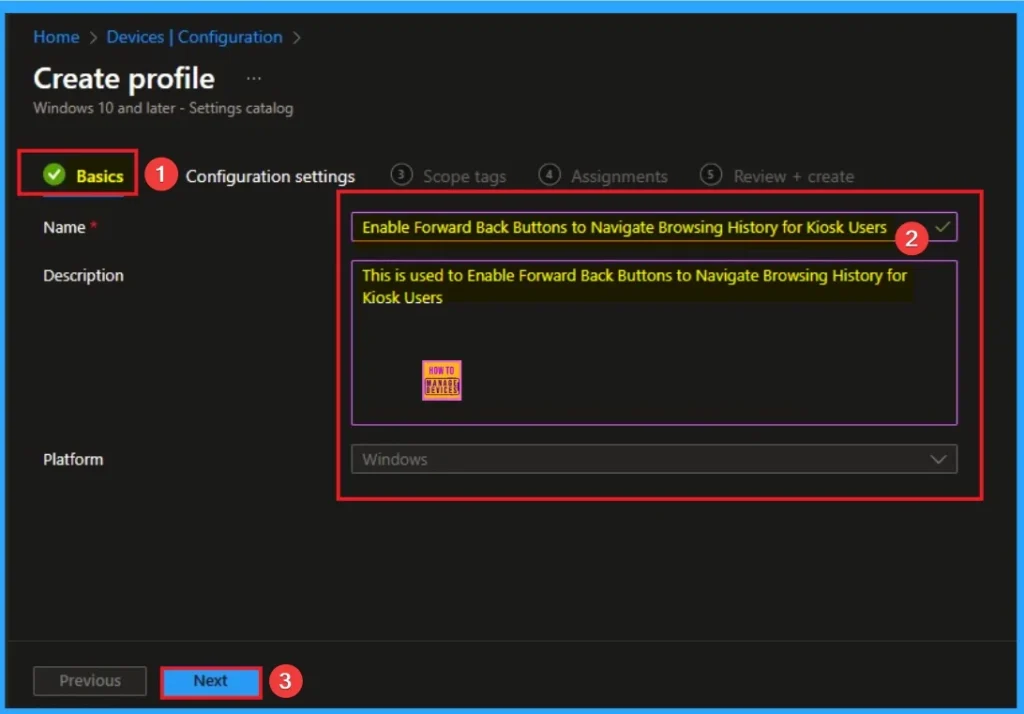
On the Basic tab you can add Name and Description for the policy for further reference. The Name field is necessary to identify the purpose of the policy and description shows more information. The Name is mandatory and if you like to add description you can add. Click on the Next Button.
Configure the Enable Navigation Buttons
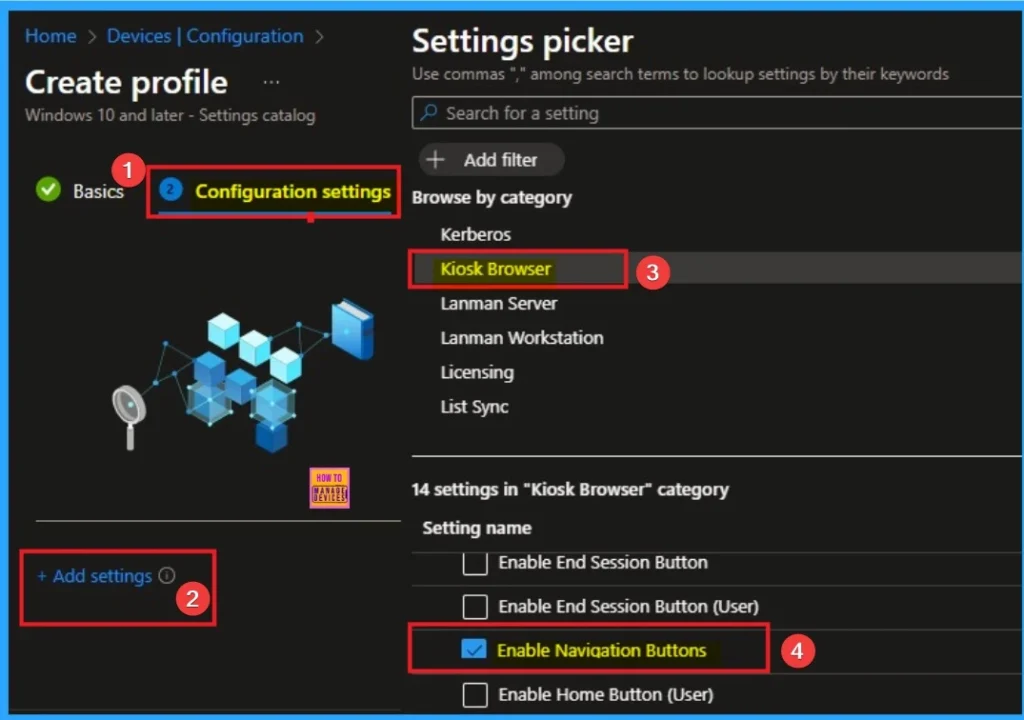
The Configuration settings page is provided to select the settings to create the policy. The Settings Catalog provides a huge number of settings. To select a settings click on the +Add settings hyperlink. Then you will get Settings Picker. Choose Kiosk Browser and select Enable Navigation Buttons. Then I close the Settings Picker.
Disable Navigation Buttons
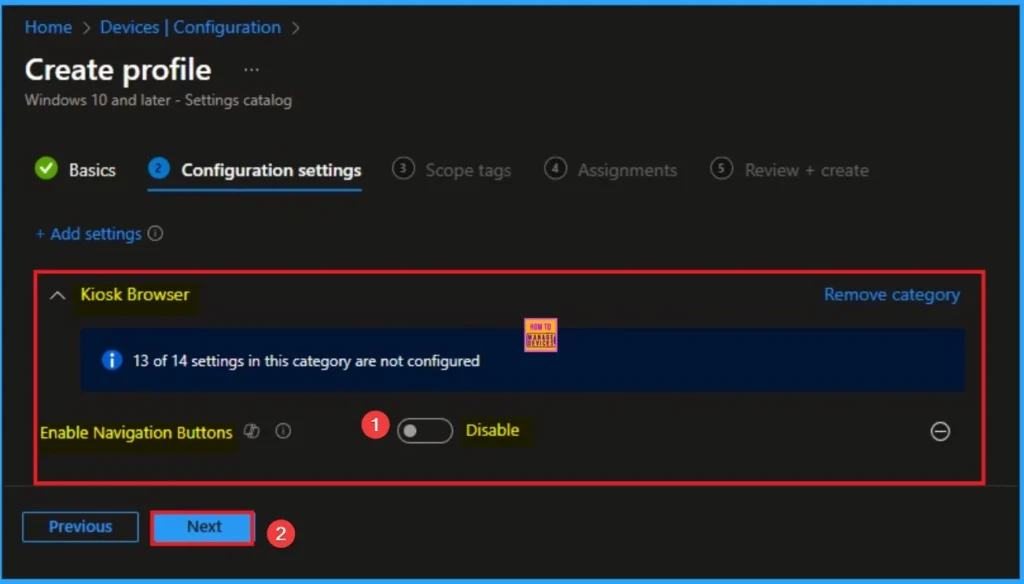
By default Navigation Buttons is disable for Kiosk Browser. If you want to go with this, click on the Next button. You you disable it you cannot access Navigation button.
Enable Navigation Buttons
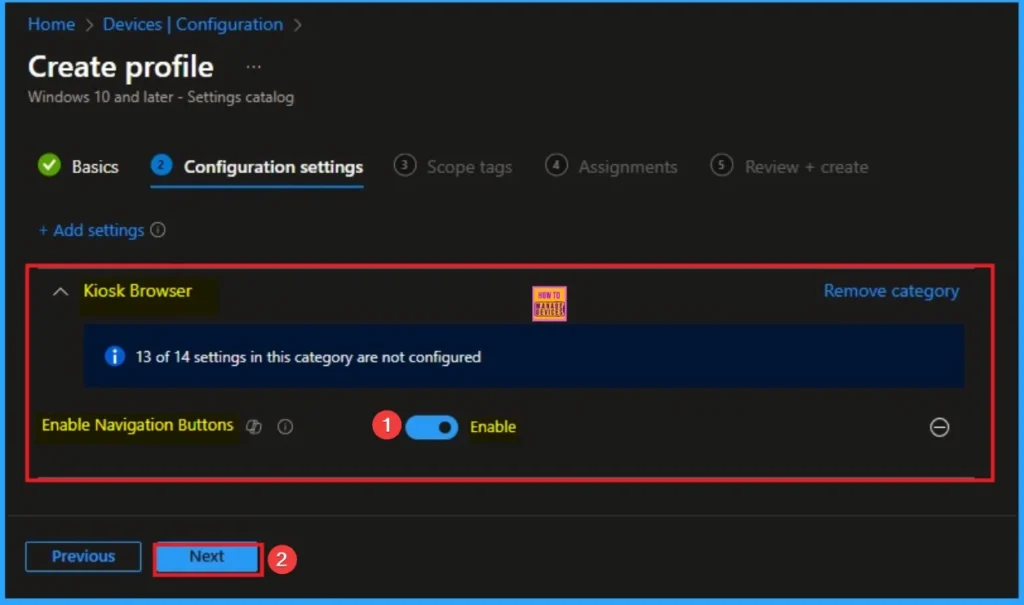
Here I would like to enable Navigation button to get Forward Back Buttons for Kiosk Users. After enabling this specific users will get the new ability. Click on the Next button to continue.
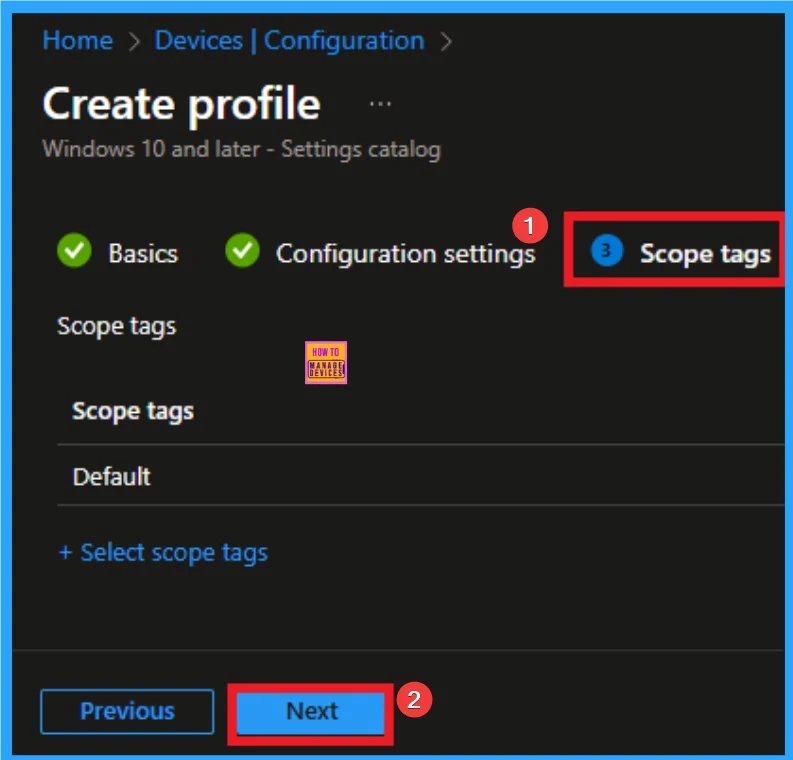
Scope Tags
By using scope tags you can restrict the visiblity of Windows Apps Access Email Settings. It is helps to organize resources as well. Here I would like to skip this section, because it is not mandatory. Click on the Next button.
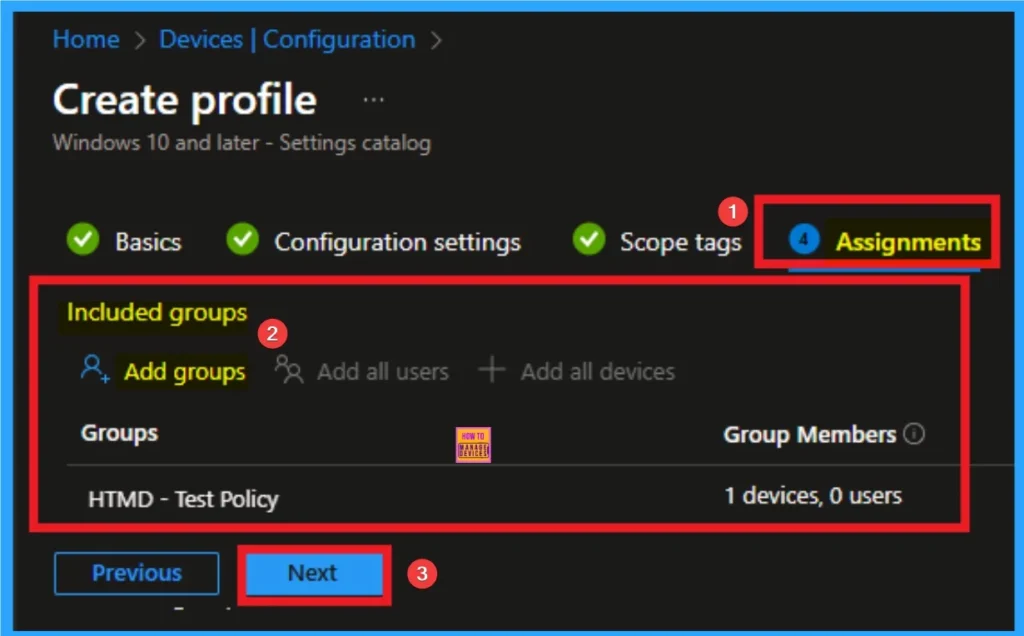
Assignment Tab for Selecting Group
To assign the policy to specific groups, you can use the Assignment Tab. Here I click, +Add groups option under Included groups. I choose a group from the list of groups and click on the Select button. Again, I click on the Select button to continue.
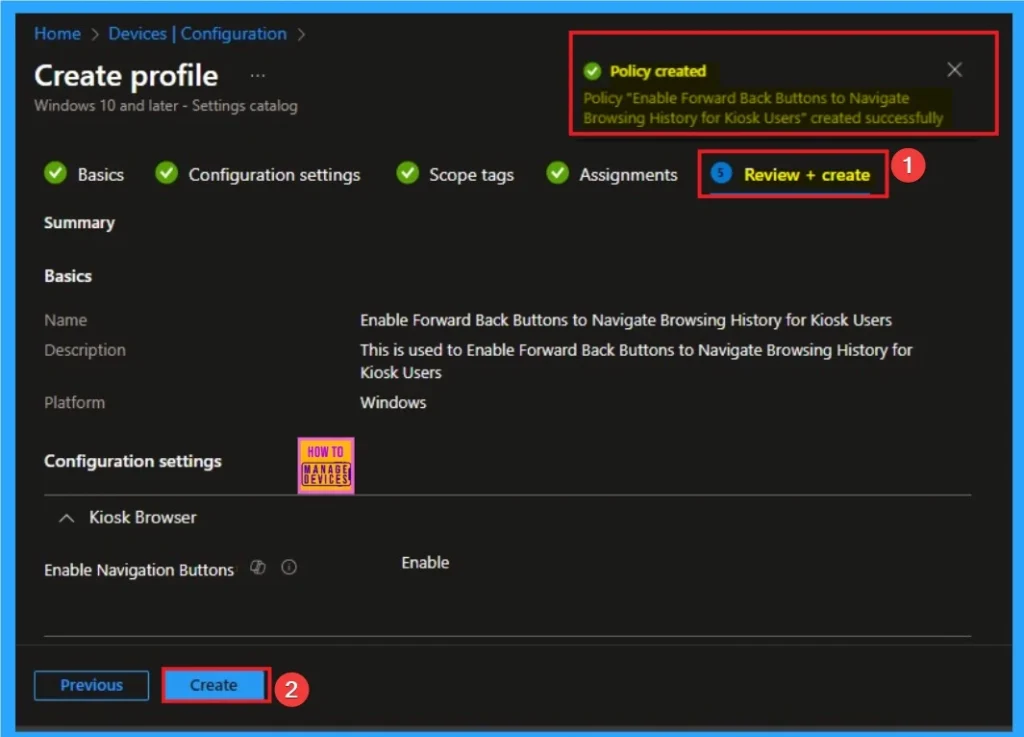
Final Step of Policy Creation
To complete the policy creation you can review all the policy details on the Review + create tab. It helps to avoid mistakes and successfully configure the policy. After varifying all the details click on the Create Button. After creating the policy you will get success message.
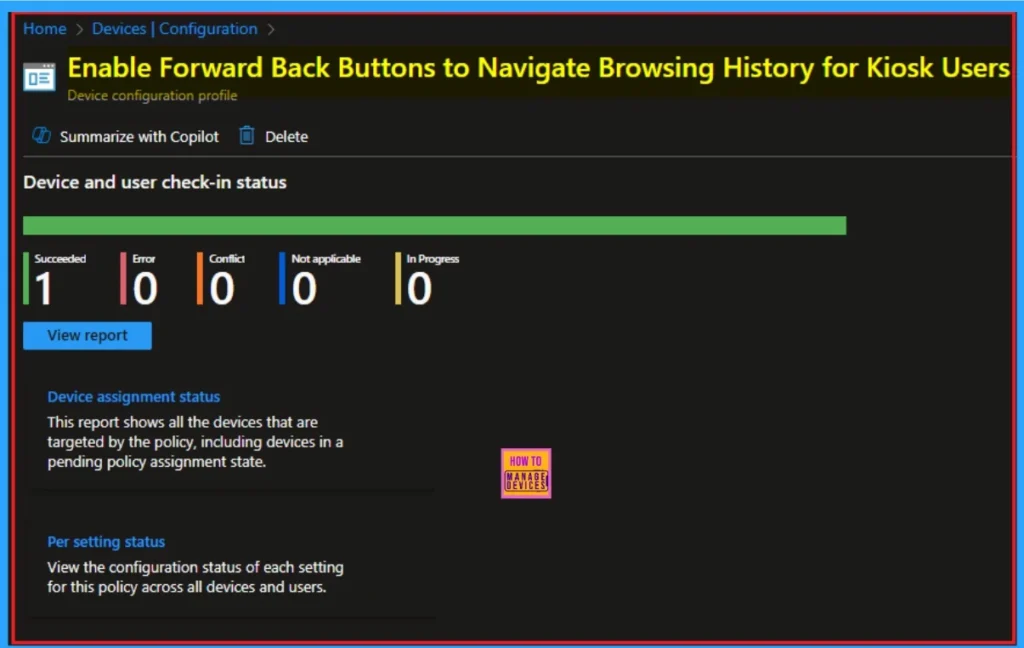
Monitoring Status
The Monitoring Status page shows whether the policy has succeeded or not. To quickly configure the policy and take advantage of the policy sync, the device on the Company Portal, Open the Intune Portal. Go to Devices > Configuration > Search for the Policy. Here, the policy shows as successful.
Client Side Verification with Event Viewer
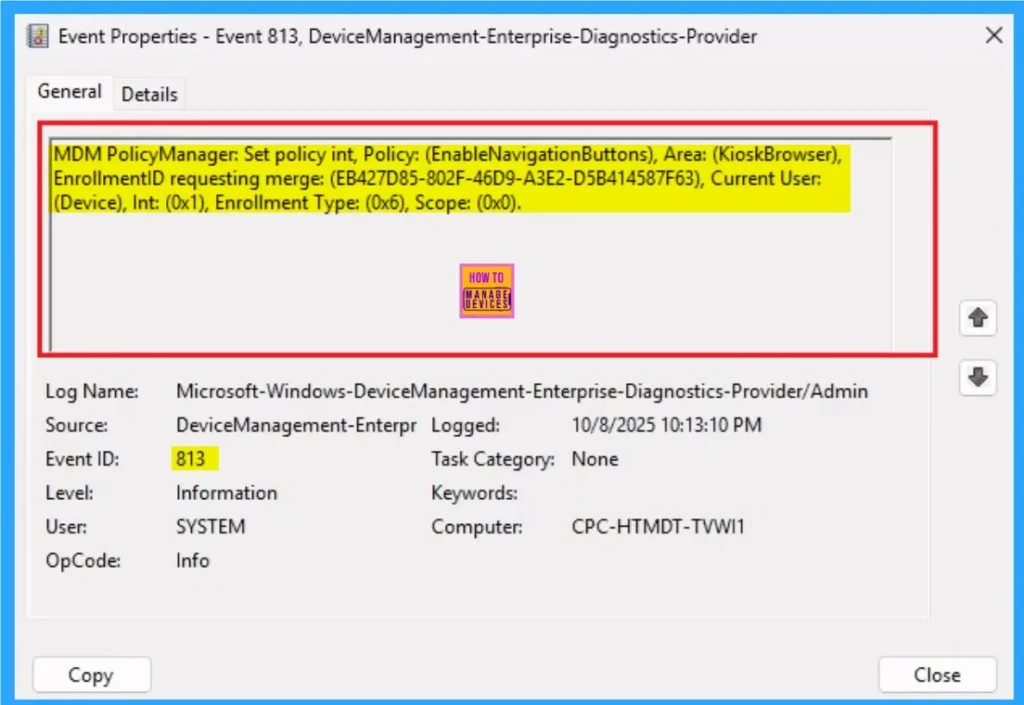
If you get success message, that doesn’t means you will get the policy advanatges. To varify the policy successfully configured to client device check the Event Viwer. Filter for Event ID 813: This will help you quickly find the relevant logs.
Open Event Viewer: Go to Start > Event Viewer. Navigate to Logs: In the left pane, go to Application and Services Logs > Microsoft > Windows > DeviceManagement-Enterprise-Diagnostics-Provider > Admin.
| Event ID Details |
|---|
| MDM PolicyManager: Set policy int, Policy: (EnableNavigationButtons), Area: (KioskBrowser), EnrollmentlD requesting merge: (EB427D85-802F-46D9-A3E2-D5B414587F63), Current User: (Device), Int: (0x1), Enrollment Type: (0x6), Scope: (0x0). |
Removing the Assigned Group from Windows Apps Access Tasks
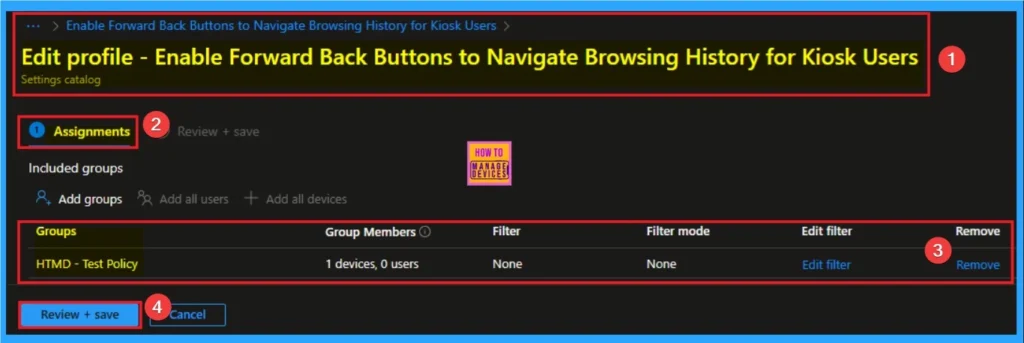
If you want to remove the Assigned group from the policy, it is possible from Intune Portal. To do this open the Policy on Intune Portal and Edit the Assignments tab and Remove the Policy.
To get more detailed information, you can refer to our previous post – Learn How to Delete or Remove App Assignment from Intune using by Step-by-Step Guide.
How to Delete Windows Apps Access Tasks
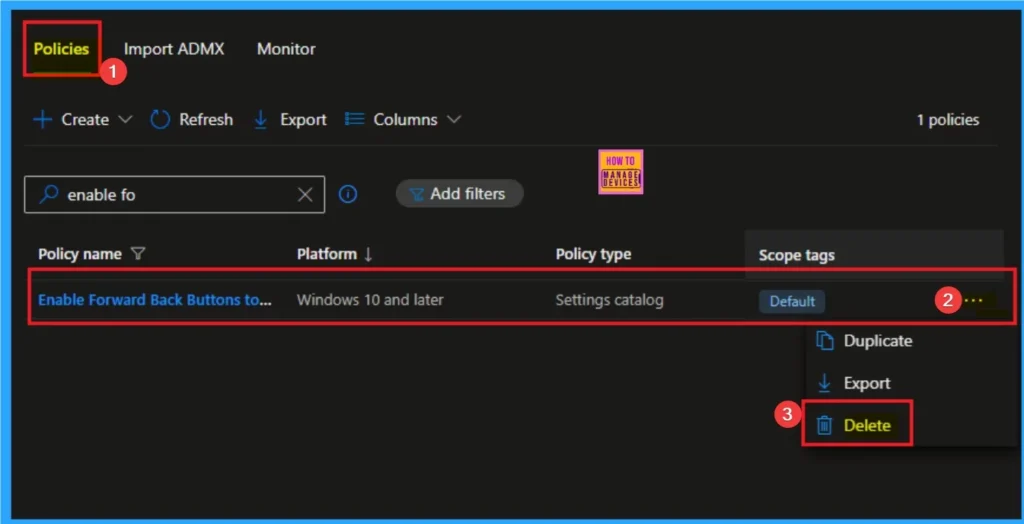
You can easily delete the Policy from Intune Portal From the Configuration section you can delete the policy. It will completely remove from the client devices.
For detailed information, you can refer to our previous post – How to Delete Allow Clipboard History Policy in Intune Step by Step Guide.
CSP Details
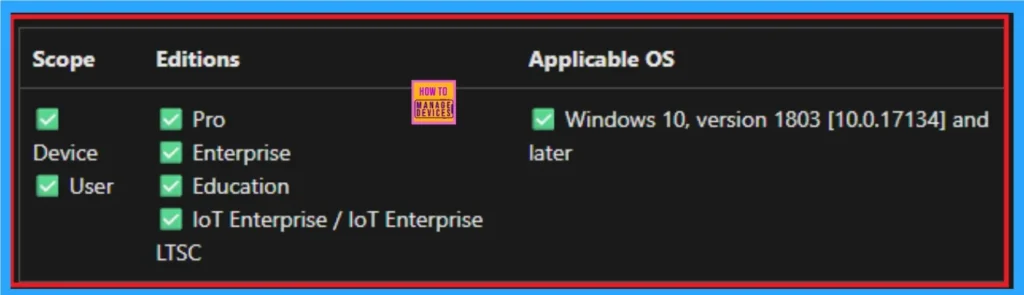
This policy only applies to the Kiosk Browser app in Microsoft Store. Windows 10, version 1803 [10.0.17134] and later OS are applicable for this policy.
Need Further Assistance or Have Technical Questions?
Join the LinkedIn Page and Telegram group to get the step-by-step guides and news updates. Join our Meetup Page to participate in User group meetings. Also, Join the WhatsApp Community to get the latest news on Microsoft Technologies. We are there on Reddit as well.
Author
Anoop C Nair has been Microsoft MVP for 10 consecutive years from 2015 onwards. He is a Workplace Solution Architect with more than 22+ years of experience in Workplace technologies. He is a Blogger, Speaker, and Local User Group Community leader. His primary focus is on Device Management technologies like SCCM and Intune. He writes about technologies like Intune, SCCM, Windows, Cloud PC, Entra, Microsoft Security, Career, etc.


Discussion